

Key Takeaways
- Eyes can change throughout every stage of life, from childhood growth to age-related shifts in the lens and cornea.
- Health conditions like diabetes and dry eye can affect your prescription between exams.
- Sudden or frequent prescription changes may signal something worth investigating.
- Regular eye exams help catch changes early and keep your vision clear.
You pick up your new glasses, and within a year, things look slightly off again. Your prescription changed, and you are left wondering if something is wrong. For most people, a shifting prescription is a normal part of how eyes age and adapt, but it helps to understand what is actually driving those changes.
Your prescription can change because your eyes are living structures that shift with age, health, and physical development. The cornea, the clear front surface of your eye, and the lens inside can both change shape over time. Those changes affect how your eye bends light, which is exactly what a prescription measures.
Total Vision Campbell offers comprehensive eye exams that measure those changes at every stage of life, so you always know where your vision stands.
How Age Affects Your Prescription
Children and Teens
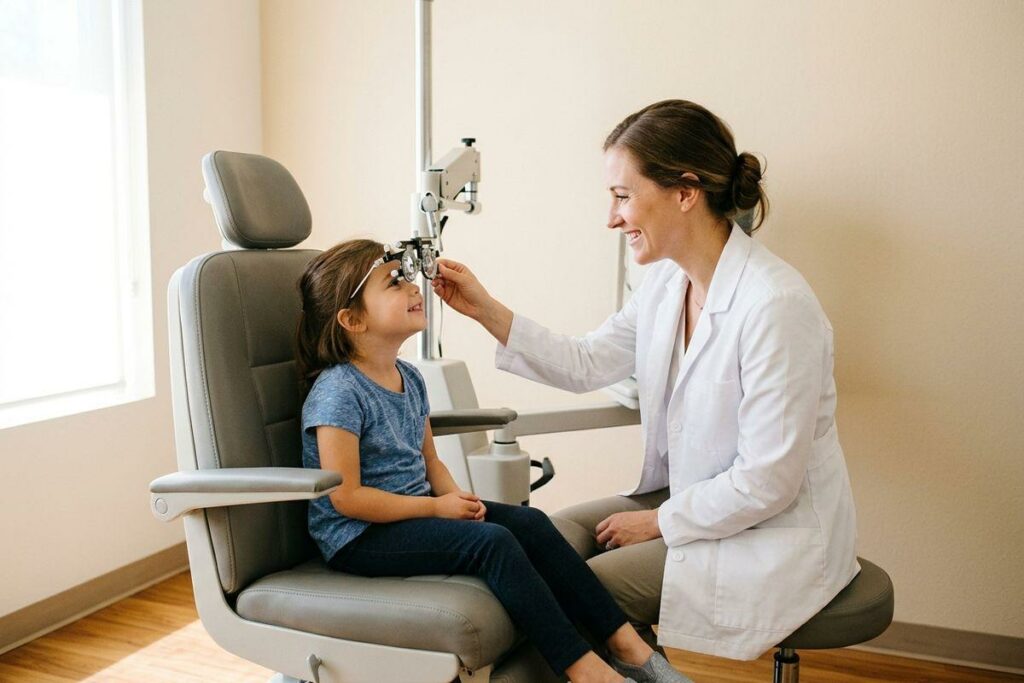
Kids’ eyes are still growing, so their prescriptions can shift from one year to the next. Myopia, or nearsightedness, tends to progress faster during the school years when the eye is still developing. A child who needs a stronger prescription each year is not unusual, but those changes are worth tracking closely. The rate of progression matters as much as the prescription itself.
This is part of why annual eye exams for children are so valuable. Catching myopia progression early opens the door to management options that can help slow how quickly it worsens. Children’s eye exams are designed to track exactly these kinds of shifts year over year. Research also shows that outdoor time and bright light exposure play a meaningful role in reducing myopia risk in kids.
Adults in Their 40s and Beyond
Around age 40, many adults notice it is getting harder to read a menu or see their phone without holding it at arm’s length. That is presbyopia, a gradual stiffening of the eye’s natural lens that reduces its ability to shift focus between near and far distances. It is one of the most common prescription changes adults experience, and it tends to progress through your mid-50s.
After age 60, cataracts become more common. A clouding lens scatters light differently, which can cause noticeable shifts in how clearly you see and may temporarily change your prescription before surgery is recommended. Adult and senior eye exams are built to catch these age-related changes early, before they significantly affect your daily vision.
Health Conditions That Can Shift Your Prescription
Blood Sugar and Diabetes
High blood sugar can lead the lens inside your eye to absorb fluid and swell slightly, which changes how it bends light. This means your vision can fluctuate depending on where your blood sugar levels are that day. A prescription measured during a blood sugar spike may not reflect your actual stable vision, which is why timing and context matter during your exam. Diabetic eye exams account for these variables and give a more accurate picture of your eye health over time.
Other Conditions Worth Knowing About
Dry eye is more than an irritant. When the tear film on your eye’s surface is inconsistent, light does not focus cleanly, and your vision can shift throughout the day. You might see clearly in the morning and struggle by afternoon.
Keratoconus is a condition where the cornea gradually thins and bulges into a cone shape. It leads to frequent and sometimes dramatic prescription changes, along with distorted vision that standard glasses can struggle to correct. Some medications also temporarily affect the fluid pressure in your eye or the flexibility of the lens, which can show up as a prescription change during that period.

Signs Your Prescription Needs Attention
Most prescription changes are gradual and expected. However, some changes deserve a closer look from an eye doctor in Campbell sooner rather than later, including:
- Sudden or dramatic prescription changes over a short period of time.
- Blurry vision that comes and goes throughout the day.
- New glare, halos around lights, floaters, or distorted vision.
These can point to something beyond a routine change, including retinal issues, pressure changes, or other conditions that benefit from early attention. Knowing the signs that call for an emergency eye exam can help you act quickly when something feels off. For ongoing conditions, eye disease diagnosis and management provide structured care to keep those changes from advancing unnoticed.
How Regular Eye Exams Help Keep Your Vision on Track
An eye exam measures more than just your prescription. Your eye doctor checks your refraction, meaning how your eye focuses light, alongside eye pressure, cornea shape, retina health, and the condition of your lens. Your medical history and daily habits, like screen time or medication use, also factor into the picture. That full view helps explain why your prescription changed and whether it signals something worth monitoring.
How Often to See an Eye Doctor in Campbell
How often you need an exam depends on your age and any existing eye conditions. A general schedule to follow looks like this:
- Children should start annual exams around age 3.
- Adults between 18 and 39 benefit from an exam every 1 to 2 years.
- Adults 40 and older are better served by annual exams as age-related changes become more common.
If you have a condition like diabetes or a family history of glaucoma, our team may recommend a more frequent schedule.
Prioritize Your Vision
A changing prescription is not something to ignore or simply wait out. Total Vision Campbell can help you understand what is driving those changes and find the right correction to match where your vision is today. Reach out to schedule your next eye exam and get a clear picture of your eye health.