

You watch your child squint at a book or creep closer and closer to the television, and you wonder—is this just a habit, or is something wrong with their vision? It can be difficult to know for sure, as children often don’t realize their sight isn’t clear because it’s the only way they have ever seen the world.
Fortunately, you don’t have to guess. While it’s important to watch for specific behavioral or physical red flags, regular preventative checkups help support their visual development. Our team at Total Vision Campbell can perform pediatric eye exams that do more than just test for glasses—they are a key part of monitoring your child’s overall health and development.
Common Signs and Symptoms of Vision Issues
Behavioral Clues
Sometimes, the biggest clues about your child’s vision come from how they act. You might notice them trying to compensate for blurry sight without even realizing it. Keep an eye out for these common behaviors.
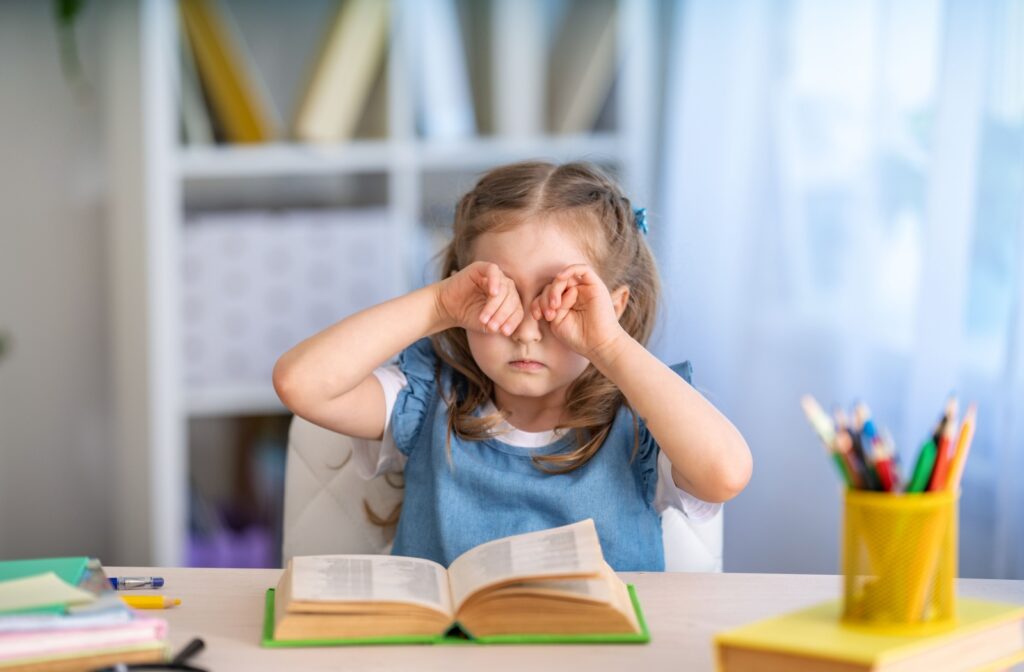
- Frequently rubbing eyes or squinting
- Sitting too close to the TV or screens
- Tilting their head to one side to compensate for conditions like strabismus (crossed eyes)
Physical Indicators
In addition to behaviors, your child may mention physical discomfort that points to a vision problem. These complaints can be easy to dismiss as something else, but they often signal that their eyes are working too hard to focus.
- Complaints of headaches or eye strain, which may indicate accommodative insufficiency
- Difficulty with hand-eye coordination
- One eye that turns in or out
Why Early and Regular Eye Exams Are Important
Support for School Success
Clear vision is a foundation for learning, from seeing the board at the front of the room to reading words on a page. When a child’s vision is blurry, school can become a frustrating experience that affects their ability to keep up. A comprehensive eye exam goes beyond a simple school screening to check for underlying issues. Undetected problems can make reading difficult and affect your child’s ability to focus in the classroom.
Prevent Future Complications
Regular exams allow an eye doctor to spot and address eye conditions early on. Catching issues before they become more serious can help protect your child’s vision as they grow and develop. These appointments also allow the eye doctor to monitor eye health, address issues before they worsen, and provide early management of conditions like myopia.
Lifestyle Factors and Your Child’s Eye Health
Balance Screen Time and Outdoor Play
Today’s world is full of screens, which require a lot of close-up focus. Balancing digital time with other activities helps give your child’s eyes a much-needed rest and can contribute to their overall well-being. You can help by encouraging frequent breaks from near work and making sure there is proper lighting for reading.
The Rise of Nearsightedness
You may have heard that nearsightedness (or myopia) is becoming more common in children. This condition can happen when the eye grows too long, causing distant objects to appear blurry. A combination of family history and lifestyle factors can play a part.
Your Child’s First Visit to the Eye Doctor
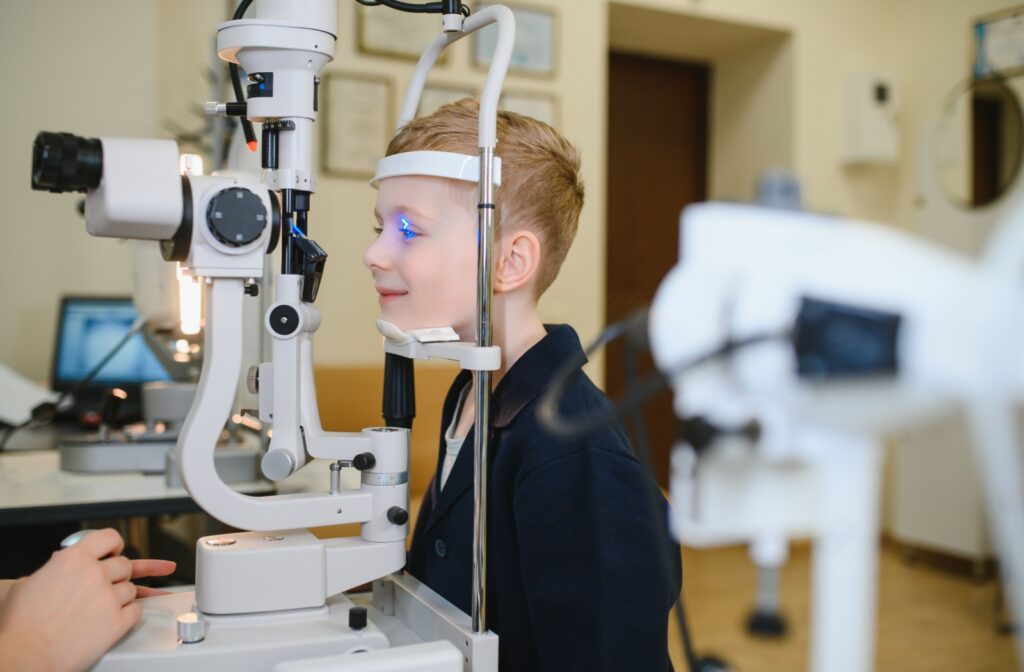
During an exam, your eye doctor and team will assess several aspects of your child’s eye health. These different eye tests are simple and interactive to check how well your child sees and how their eyes work together as a team. Our team will check for common refractive errors like nearsightedness, look for signs of lazy eye or crossed eyes, and assess your child’s overall eye health.
A Kid-Friendly Experience
An eye exam should be a positive experience, not a stressful one. The tests are designed to be engaging for children, using pictures and shapes instead of just letters. An eye doctor in Campbell can help make sure your child feels comfortable from start to finish, so there is no reason for them to feel nervous.
Set Your Child Up for Success
Taking a proactive role in your child’s eye health can support their success in school and beyond. If you have questions about your child’s vision, our team at Total Vision Campbell is ready to help.
Schedule a visit to give your child the foundation for a lifetime of healthy sight.